Business License

Development Trends of the Injection Molding Processing Industry
Development Trends of the Injection Molding Processing Industry
To achieve rapid, stable and sound development of the injection molding processing sector, exchanges with numerous enterprises in the industry have led to a consensus: alongside emphasis on technology, business operations, management and production, sustained development and innovation must also be prioritized.
(I) Development and innovation constitute overarching, long-term and fundamental strategies for the industry’s growth.
We must avoid short-sighted thinking: focusing only on harvesting timber instead of nurturing forests, prioritizing immediate gains over long-term prospects, fixating on trivial details while ignoring core fundamentals. It is inadvisable to mechanically copy past experience, established knowledge and directives without strategic planning; otherwise, the injection molding industry will be steered onto narrow, bumpy, detoured or even dead-end paths.
(II) Avoid overemphasizing specific tactics at the expense of overarching strategies.
Sound industry development relies on diverse operational tactics covering technical expertise, sales practices, administration and public relations, as well as comprehensive strategies including technological R&D, talent cultivation, marketing and financing planning. Tactics are micro-level strategies, and strategies are macro-level tactics. Both hinge on deliberate planning, yet differ in planning scope and timeline. Prioritizing tactics over strategies means valuing minor gains over long-range overall interests, and overemphasis on standalone technology is a narrow-minded approach that draws conclusions from limited evidence. From a macro perspective, development and innovation represent the paramount overarching strategy for the entire injection molding processing industry.
Development and innovation serve to adapt to shifting market environments. We are living in an era of drastic transformations, with unprecedented breadth, depth and speed of changes sweeping across China and its surrounding regions. China’s WTO accession has integrated its plastic manufacturing industry into a volatile global marketplace marked by continuously evolving consumer markets, fierce competitors and multifaceted influencing factors. Market dynamics compel enterprises to perceive, adapt to and excel amid changes, and formulating fresh development and innovation strategies stands as the primary prerequisite for flexible market adaptation.
Upholding the mission of serving the entire injection molding community, we regularly discuss the industry’s growth trajectory with industry insiders and firmly believe the domestic injection molding processing sector is poised to capture a larger market share in China. Coined by an unknown source, the moniker “World Factory” has become a core driver for foreign investment into China in recent years. Propelled by robust expansion, China has evolved into a major production, sales and export base for plastic products ranging from automotive fittings, motorcycle parts and computer casings to other IT hardware, hardware tools, electrical appliances and small home appliances. The industry’s growth rate has consistently outpaced the national average, unlocking enormous untapped potential. As a vital bridge linking domestic manufacturers with global markets, China’s injection molding industry boasts expansive development prospects, underpinned by the country’s vibrant economic vitality, robust financial and commercial service systems, as well as mature logistics, information and commodity circulation networks, all of which create abundant opportunities for industrial innovation and advancement.
Consumption has entered an era of personalized demand, mandating precise market positioning for plastic manufacturers. Enterprises need to concentrate resources to penetrate specific niche markets, leverage market segmentation principles to specialize in targeted fields and build proprietary core competitive edges. Instead of engaging in cutthroat price wars with peers, we advocate a transformative development path for China’s injection molding industry against the prevailing market landscape: abundant generic plastic components but a shortage of high-tech, high-value-added and specialty plastic products.
Boasting a vast market full of both opportunities and cutthroat competition, the injection molding industry follows a simple rule: visionaries create opportunities, ambitious players seize opportunities and mediocre operators let opportunities slip away. Competitive advantages rooted solely in manufacturing ordinary plastic parts are extrinsic and transient. Our ultimate goal is to gain market supremacy through the unique industrial value of injection molding processing. Winning recognition from downstream industrial clients with dependable quality, stable product performance, refined appearance and reasonable pricing will substantially elevate the industry’s market reputation. We strongly advocate cultivating the domestic injection molding market and tapping into latent demands of industrial customers.
To drive industrial development and innovation, enterprises need to reassess emerging market demands and trends, newly arising challenges and opportunities, their own strengths and weaknesses, plus critical operational links and implementation steps. Such reassessment is necessary because many past market analyses have become obsolete or contained substantial flaws and errors from the outset.
Field visits to numerous domestic injection molding processors reveal a longstanding industrial drawback: most manufacturers lack independent product development capabilities and only undertake basic component molding services without further deep processing after molding, limiting their business scope to outsourced injection-molded spare parts production. As a result, profit margins keep shrinking and corporate performance struggles to improve year after year.
Realizing industrial upgrading via development and innovation calls for revamping business scopes, operational approaches, organizational frameworks, management systems and corporate strategies. There exists no universal blueprint for industrial strategy. While core developmental philosophies remain consistent across enterprises, specifics regarding content, focal points and structural layout vary drastically from one business to another. Recent site visits to several Singapore-based plastic manufacturers offered valuable insights: these overseas firms have pulled ahead of Chinese counterparts by upgrading from basic component molding to integrated full-spectrum operations covering product design, development and assembly, steadily advancing toward OEM and ODM production models.
Shifting toward OEM and ODM manufacturing is an inevitable developmental pathway for China’s injection molding processing industry.
Recently Posted
-
A Full Analysis of Household Appliance Plastic Component Processing at Ningbo Dengpan Technology
June 6, 2026Crafting Home Appliance Plastics with Ingenuity, Forging Premium Quality via Precision Manufacturing – A Full Analysis of Househol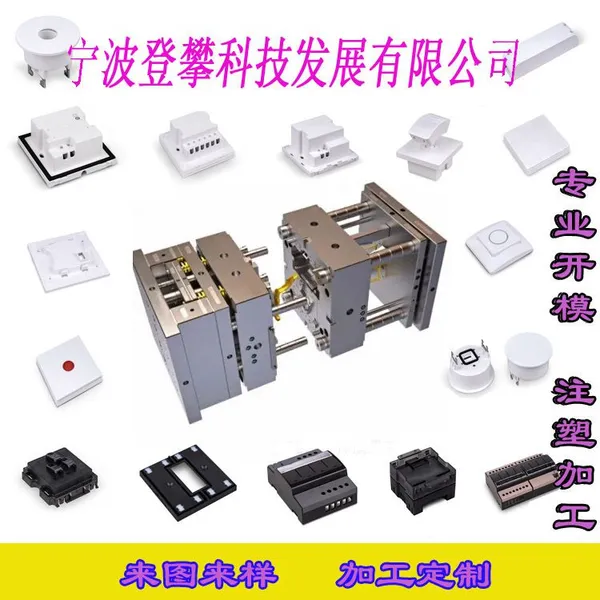 Read More
 -
Mastering InjecThe Ingenuity Journey of Ningbo Dengpan Injection Molding
June 5, 2026Mastering Injection Molding Technology, Forging a Benchmark in Quality — The Ingenuity Journey of Ningbo Dengpan Injection Molding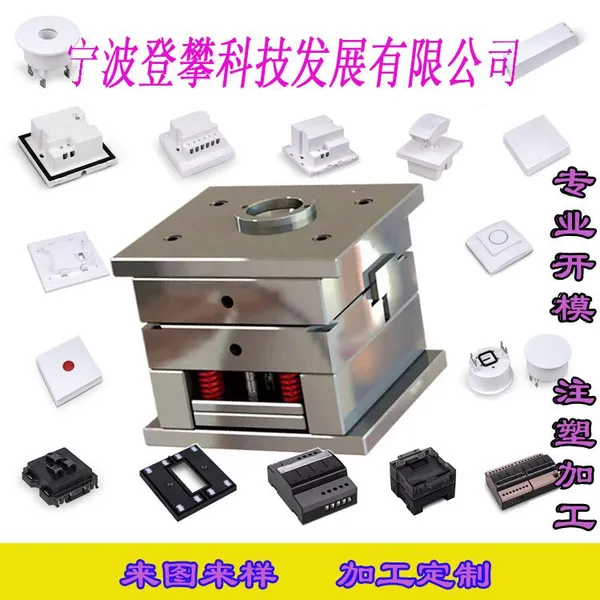 Read More
 -
Ningbo Dengpan Technology Injection Mold Plastic Injection Molding Processing
October 22, 2025Ningbo Dengpan Technology was established in February 2017. Although it is a young company, it is a pioneer company with considera Read More