Business License

Ningbo Dengpan Technology Injection Mold Plastic Injection Molding Processing

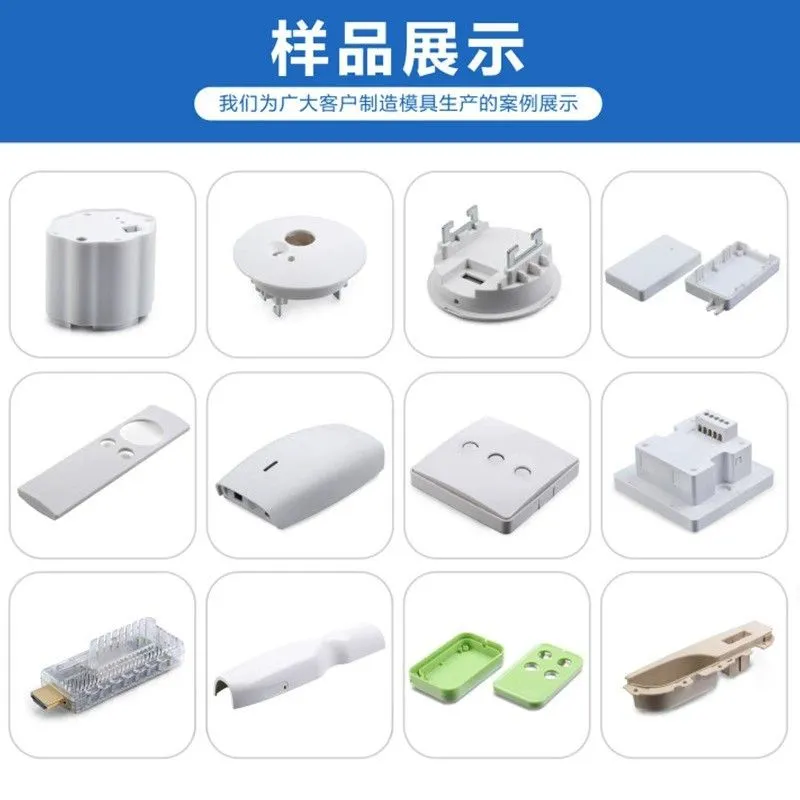
Ningbo Dengpan Technology was established in February 2017. Although it is a young company, it is a pioneer company with considerable industry reputation. It is located on the shores of the scenic Jiulong Lake in Zhenhai District, Ningbo City, Zhejiang Province. The company is an electronic intelligent product company integrating R&D, design, and manufacturing. It mainly produces injection molds, injection molded parts processing, plastic molds, injection molded plastic product processing, such as remote controls, electromechanical casings, electronic plastic parts and a series of plastic parts for home intelligent control systems.
Injection mold is a tool for producing plastic products; it is also a tool that gives plastic products complete structure and precise dimensions. Injection molding is a processing method used in the mass production of certain parts with complex shapes. Specifically, it refers to injecting heated and melted plastic into the mold cavity at high pressure from an injection molding machine. After cooling and solidifying, a molded product is obtained. Basic classification: Injection molds are divided into thermosetting plastic molds and thermoplastic plastic molds according to molding characteristics; according to the molding process, they are divided into transfer molds, blow molds, cast molds, thermoforming molds, hot pressing molds (compression molds), injection molds, etc. Among them, hot pressing molds can be divided into overflow, semi-overflow, and non-overflow types based on the overflow method. Injection molds can be divided into cold runner molds and hot runner molds based on the pouring system; according to the loading and unloading method, they can be divided into mobile and fixed types. Mold composition
Although the structure may vary due to different types and properties of plastics, shapes and structures of plastic products, and types of injection machines, the basic structure is the same. The mold is mainly composed of pouring system, temperature control system, molded parts and structural parts. Among them, the pouring system and molded parts are the parts that are in direct contact with plastics and change with the plastics and products. They are the most complex and changing parts of the mold and require the highest processing smoothness and precision. The injection mold consists of two parts: a movable mold and a fixed mold. The movable mold is installed on the movable template of the injection molding machine, and the fixed mold is installed on the fixed template of the injection molding machine. During injection molding, the movable mold and the fixed mold are closed to form the pouring system and cavity. When the mold is opened, the movable mold and the fixed mold are separated to facilitate remo
The system refers to the runner part before the plastic enters the cavity from the nozzle, including the main channel, cold material cavity, runner and gate, etc. The gating system is also called the runner system. It is a set of feed channels that guide the plastic melt from the injection machine nozzle to the mold cavity. It usually consists of a main channel, a runner, a gate and a cold material cavity. It is directly related to the molding quality and production efficiency of plastic products.
A passage in the mold that connects the nozzle of the injection molding machine to the runner or cavity. The top of the main flow channel is concave to connect with the nozzle. The diameter of the main channel inlet should be slightly larger than the diameter of the nozzle (0.8mm) to avoid overflow and to prevent the two from being blocked due to inaccurate connection. The inlet diameter depends on the size of the product, generally 4-8mm. The main channel diameter should be expanded inward at an angle of 3° to 5° to facilitate the demoulding of the runner excess. The cold slug cavity is a cavity located at the end of the main flow channel to capture the cold slug generated between two injections at the end of the nozzle to prevent clogging of the runner or gate. If cold material is mixed into the mold cavity, internal stress will easily occur in the manufactured product. The diameter of the cold material cavity is about 8-10mm and the depth is 6mm. In order to facilitate demoulding, the bottom is often bor
The channel connecting the main channel and each cavity in a multi-slot mold. In order for the molten material to fill each cavity at a constant speed, the runner arrangement on the mold should be symmetrical and equidistant. The shape and size of the runner cross section have an impact on the flow of plastic melt, product demoulding and the ease of mold manufacturing. If we consider the flow of equal amounts of material, the flow channel with circular cross-section has the smallest resistance. However, because the specific surface of the cylindrical runner is small, it is unfavorable for the cooling of the runner extensions. Moreover, the runner must be opened on the two halves of the mold, which is labor-intensive and difficult to align. Therefore, a trapezoidal or semicircular cross-section runner is often used and is opened on half of the mold with a demoulding rod. The runner surface must be polished to reduce flow resistance and provide faster mold filling speed. The size of the runner depends on the
The functions of the gate are: A. Control the material flow speed: B. Prevent backflow during injection due to early solidification of the melt stored in this part: C. Subject the passing melt to strong shear and increase the temperature, thus reducing the apparent viscosity to improve fluidity: D. Facilitate the separation of the product from the flow channel system. The design of gate shape, size and location depends on the nature of the plastic, the size and structure of the product. Generally, the cross-sectional shape of the gate is rectangular or circular, and the cross-sectional area should be small and the length should be short. This is not only based on the above effects, but also because it is easier for a small gate to become larger, but it is difficult to reduce a large gate. The gate position should generally be selected where the product is thickest without affecting the appearance. The gate size should be designed taking into account the properties of the plastic melt. The cavity is the spac
In order to meet the mold temperature requirements of the injection process, a temperature adjustment system is required to adjust the temperature of the mold. For injection molds for thermoplastic plastics, the cooling system is mainly designed to cool the mold. The common way to cool the mold is to open a cooling water channel in the mold and use the circulating cooling water to take away the heat of the mold. In addition to using hot water or steam in the cooling water channel, electric heating elements can also be installed inside and around the mold to heat the mold. Molded parts Molded parts refer to various parts that constitute the shape of the product, including movable molds, fixed molds and cavities, cores, forming rods, and exhaust ports. The molded part consists of a core and a die. The core forms the inner surface of the product, and the die forms the outer surface shape of the product. After the mold is closed, the core and cavity form the cavity of the mold. According to the process and manu
It is a groove-shaped air outlet opened in the mold to discharge the original gas and the gas brought in by the melt. When the molten material is injected into the mold cavity, the air originally existing in the cavity and the gas brought in by the melt must be discharged out of the mold through the exhaust port at the end of the material flow. Otherwise, the product will have pores, poor connections, unsatisfactory mold filling, and even the accumulated air will be compressed to generate high temperatures and burn the product. Under normal circumstances, the exhaust hole can be located either at the end of the melt flow in the cavity or on the parting surface of the mold. The latter is to open a shallow groove with a depth of 0.03-0.2mm and a width of 1.5-6mm on one side of the die. During injection, a lot of molten material will not seep out of the vent hole, because the molten material will cool and solidify there and block the channel. The exhaust port must not be opened facing the operator to prevent t
2. Push-out mechanism During the mold opening process, a push-out mechanism is required to push or pull out the plastic products and the condensate in the flow channel. Push out the fixed plate and push plate to hold the push rod. There is generally a reset rod fixed in the push rod, which resets the push plate when the moving and fixed molds are closed.
3. Side core-pulling mechanism Some plastic products with side concavities or side holes must be side-parted before being pushed out. After the lateral core is pulled out, the mold can be smoothly demoulded. At this time, a side core-pulling mechanism needs to be installed in the mold.
Injection device The injection device is a device that melts the resin material by heating and then injects it into the mold. As shown in the figure, the resin is squeezed from the material head into the barrel, and the melt is transported to the front end of the barrel through the rotation of the screw. In that process, the resin material in the barrel is heated under the action of the heater, and the resin becomes a molten state under the action of the shear stress of the screw. The molten resin equivalent to the molded product and the main channel and branch channel is retained at the front end of the barrel (called metering), and the screw continuously moves forward to inject the material into the mold cavity. When the molten resin flows in the mold, the moving speed of the screw (injection speed) must be controlled, and the pressure (holding pressure) must be used after the resin fills the mold cavity. When the screw position and injection pressure reach a certain value, we can switch the speed control
1 Processing enterprises should first equip each mold with a resume card to record and count its use, care (lubrication, cleaning, rust prevention) and damage in detail. Based on this, it can be found which parts and components have been damaged and the degree of wear, so as to provide information for finding and solving problems, as well as the molding process parameters of the mold and the materials used in the product, so as to shorten the test run time of the mold and improve production efficiency.
2. Processing companies should test various properties of the mold when the injection molding machine and mold are operating normally, and measure the dimensions of the final molded plastic part. Through this information, the current status of the mold can be determined, and the damage to the cavity, core, cooling system, parting surface, etc. can be found. Based on the information provided by the plastic part, the damage status of the mold and maintenance measures can be judged.
3. It is necessary to focus on tracking and testing several important parts of the mold: the function of the ejection and guide parts is to ensure the opening and closing movement of the mold and the ejection of plastic parts. If any part of them is stuck due to damage, it will cause production to stop. Therefore, the mold ejector pin and guide pin should always be kept lubricated ( The most suitable lubricant should be selected), and regular checks should be made on the ejector pins, guide posts, etc. for deformation and surface damage. Once found, they should be replaced in time; after completing a production cycle, professional anti-rust oil should be applied to the working surface, movement, and guide parts of the mold, especially Pay attention to the protection of the elastic strength of the bearing parts of the gear and rack molds and the spring mold to ensure that they are always in the best working condition; as the production time continues, scale, rust, silt, algae, etc. are easily deposited in th
Application fields Injection molds are important process equipment for the production of various industrial products. With the rapid development of the plastics industry and the promotion and application of plastic products in industrial sectors such as aviation, aerospace, electronics, machinery, ships, and automobiles, products have increasingly higher requirements for molds. Traditional mold design methods can no longer adapt to today's requirements. Compared with traditional mold design, computer-aided engineering (CAE) technology has great advantages in improving productivity, ensuring product quality, and reducing costs and labor intensity. In the processing of injection molds, all kinds of CNC machining are used. The most commonly used ones are CNC milling and machining centers. CNC wire cutting and CNC EDM are also very commonly used in CNC mold processing. Wire cutting is mainly used in various straight-wall mold processing, such as concave and convex molds in stamping processing, inserts and slide
The temperature at various points in the injection mold is not uniform, and it is also related to the time point in the injection cycle. The function of the mold temperature controller is to keep the temperature constant between 2min and 2max, which means to prevent the temperature difference from fluctuating up and down during the production process or gap. The following control methods are suitable for controlling the temperature of the mold: controlling fluid temperature is the most commonly used method, and the control accuracy can meet the requirements of most situations. Using this control method, it is shown that the temperature in the controller and the mold temperature are not consistent; the temperature of the mold fluctuates considerably because the thermal factors affecting the mold are not directly measured and compensated. These factors include changes in the injection cycle, injection speed, melting temperature and room temperature. The second is the direct control of mold temperature. This m
Recently Posted
-
A Full Analysis of Household Appliance Plastic Component Processing at Ningbo Dengpan Technology
June 6, 2026Crafting Home Appliance Plastics with Ingenuity, Forging Premium Quality via Precision Manufacturing – A Full Analysis of Househol Read More
 -
Development Trends of the Injection Molding Processing Industry
June 6, 2026Development Trends of the Injection Molding Processing IndustryTo achieve rapid, stable and sound development of the injection mol Read More
 -
Mastering InjecThe Ingenuity Journey of Ningbo Dengpan Injection Molding
June 5, 2026Mastering Injection Molding Technology, Forging a Benchmark in Quality — The Ingenuity Journey of Ningbo Dengpan Injection Molding
Read More